TIME LINE

Showing posts with label Shenyang. Show all posts

Friday, August 19, 2011

Yuwan Restaurant in Shenyang

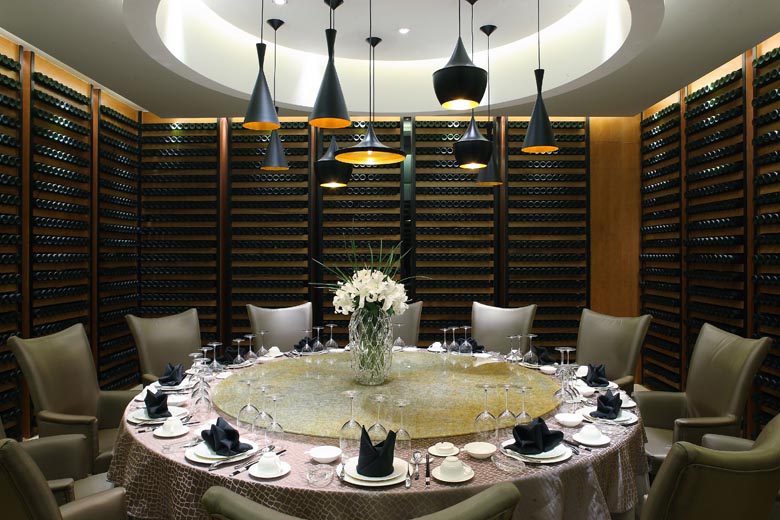
The project is a design for a 5-star contemporary restaurant in Shenyang which serves western and eastern fusion delicacies. The restaurant consists of a few important primary areas and programs namely, the Main Dinning Hall (with light stage), the Side Dinning Hall (with main stage), VIP Room 1, VIP Rom 2, VIP Room 3, Buffet Counters, Serving Counters, Seafood Counter, Entrance Hall (with waterscape features), Service Storage Zone and Kitchen Zone. The Main focus of the interior architecture would have to be the Front of the Restaurant, frosted by a huge glass curtain wall. The triple volume space and the full height glass curtain wall allow the architects to use interior design to contribute to the total architecture of the building. Recessed alcoves with red light shades are placed in a random yet orderly formation with black granite strips of different thickness as the main cladding materials. The floor is divided into separate programs, where dinning hall is decentralised. Natural scapes are introduced to help demarcate the zones without visual blockades. More importantly, every public zone has their own special focal points and conversational pieces to ensure not only a gastronomic feast, but a visual feast for the dinners. The architects wanted to draw the design back to its Chinese roots and at the same time, not to look too “ethnic”. A Contemporary Chinese design, that is. The architects utilised prominent “Chinese” colours like auspicious red and imperial yellow. Black and dark grey are utilised quite freely to contrast the pastel colors as well as to give the space an “up-market” feel. Wood elements are used to neutralise the contrast. For example, the ball light shades, the rattan furniture, the timber flooring to name but a few.




by Nota Design

Qing Shui Wan Hotel in Shenyang

The building layout is pretty much square with standard column grids at fixed intervals. The design respected the strong central axis predominant in most grand Chinese Architecture and planning. The elevated grand entrance was created big and deep flanked by a series of columns lining the wide stairway, creating a sense of palace grandeur. Once in the 3 storey high Atrium, one’s eyes will be drawn to the 3 elegant glass bubble lifts which are fronted by a huge feature pool, animated by synchronized water fountains and changing LED lighting. Flanking the atrium are columns transformed into display alcoves with a series of red porcelain vases as insets. The designers’ intention was to create a deliberate strong display of cultural dominance. The bubble lifts act as a marker for vertical transportation. Once at the second storey, one is greeted by a spacious lobby which leading to the F&B cluster. The “wall-less” open-concept plan calls for intelligent use of elements to segregate the spaces physically, but not visually.

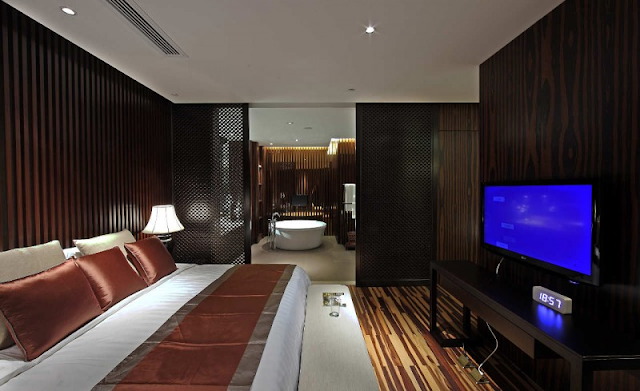
For the Jap restaurant, a light stainless steel chains are utilized as drapes while suspended “rocks” (surface- treated concrete secured to stainless steel cable) act as physical screens. Light weight timber trellis interfaces with the dining spaces for a light ethnic touch. Japanese Lacquered table tops act as subtle cultural reminder. Sitting on the other quieter side of the floor are the Tea appreciation area, rest lounges and the massage rooms. The “floating” Tea Deck surrounded by feature pond acts as the area marker on the sprawling plan. On the Third storey, an off-angled “floating” deck which houses the service counter and the discussion area established itself as the main feature for the flagship services. A ‘bridge’ leads one from the deck to the spa rooms. An open-concept feel is maintained in the common area while enclosed areas are concealed with rustic feature granite walls fronting the common area. The comparatively lower ceiling is finished with timber trellis with aluminium frameworks to continue the contemporary ethnic feel. Treatment rooms, spa rooms and hotel rooms use warm hue to establish a sense of homely atmosphere but maintaining a high-end feel through usage of intricate trellises and lattice screens.

Overall, tranquillity is achieved with the clever application of simple, uncluttered space planning with injection of ethnical and vernacular elements. Water is introduced as the key intertwining element within the interior to effectively soften the hard edges of the built elements. Moreover, the sounds of the water filtration and fountains form a natural acoustic backdrop for the overall ambiance. Cultural artefacts are added


by Nota Design