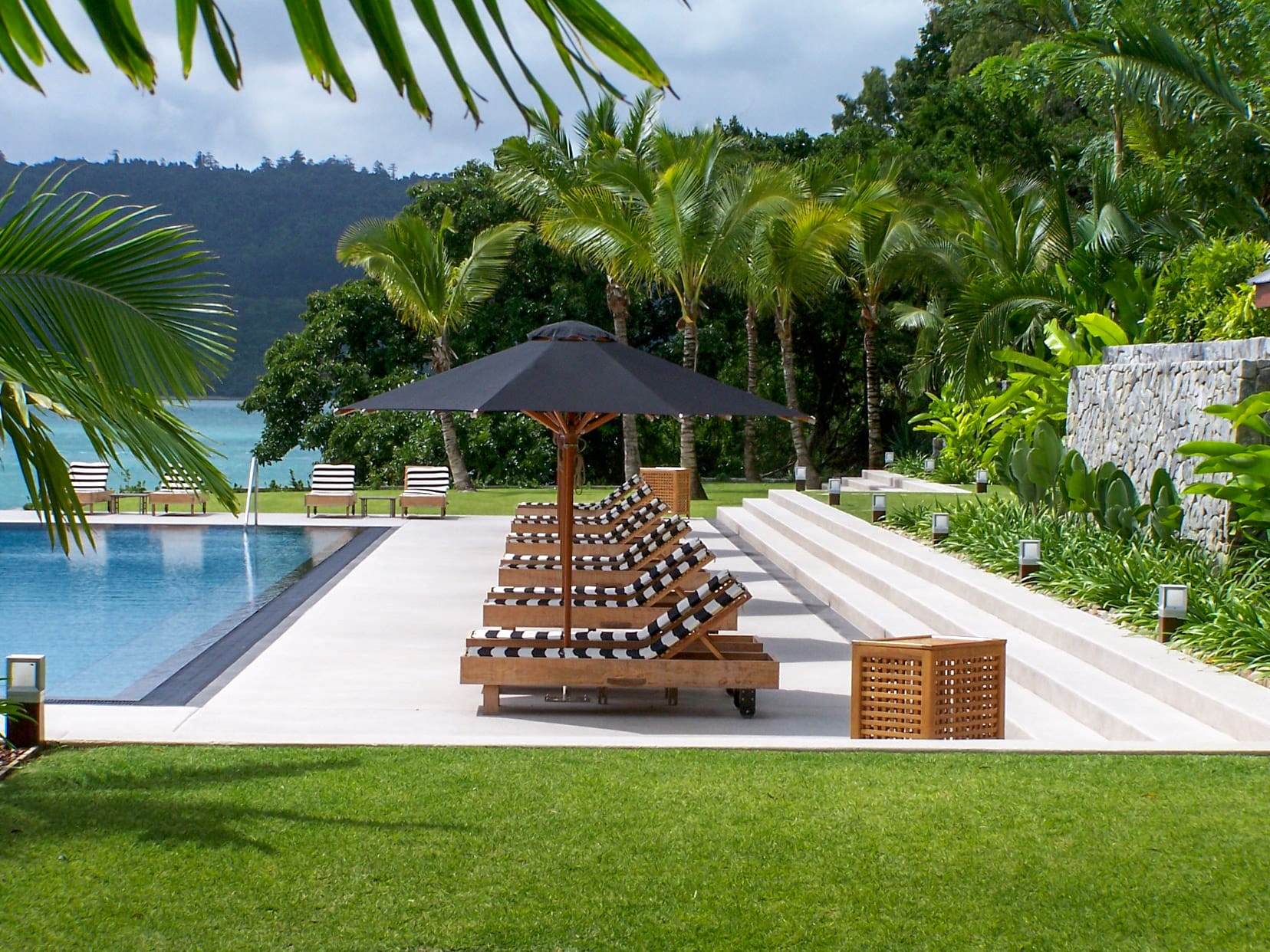
Qualia is a luxury resort located on Hamilton Island, which is part of the Whitsunday Islands in Queensland, Australia. It is known for its stunning views of the turquoise waters of the Great Barrier Reef and the secluded and tranquil atmosphere it offers.
Qualia offers a range of luxurious accommodations, including pavilions and beach houses, all designed with a contemporary and sophisticated aesthetic. The resort prides itself on providing a high level of service and personalized attention to its guests.
Guests at Qualia can enjoy a variety of activities, such as snorkeling, diving, sailing, and helicopter tours to explore the surrounding natural beauty. The resort also features two exclusive restaurants, a spa, and a fitness center for guests to relax and rejuvenate.
Overall, Qualia is a top-tier luxury destination for travelers seeking a serene and luxurious retreat in the heart of the Great Barrier Reef.
The architectural design of Qualia on Hamilton Island was completed by the Australian firm, Chris Beckingham Architects. Chris Beckingham is an acclaimed architect known for his innovative and sustainable designs.
Qualia's architectural design reflects a contemporary and minimalistic aesthetic, incorporating natural elements and blending seamlessly with the surrounding environment. The use of open spaces, timber accents, and floor-to-ceiling windows allow for expansive views of the breathtaking landscape.
The resort's design also takes into consideration privacy and exclusivity, with each pavilion and beach house carefully positioned to provide a sense of seclusion and tranquility for guests.
Chris Beckingham Architects' attention to detail and ability to create harmonious spaces have contributed to Qualia's reputation as a world-class luxury destination.
The interior design of Qualia on Hamilton Island was created by Australian interior designer, Hecker Guthrie. Hecker Guthrie is a renowned design firm known for their sophisticated and contemporary approach to interior design.
The interiors of Qualia showcase a seamless blend of elegance, comfort, and natural aesthetics. The spaces are thoughtfully designed to create a sense of tranquility and relaxation, taking inspiration from the surrounding tropical environment. The use of luxurious materials, neutral tones, and carefully curated furnishings adds to the overall ambiance of understated luxury found throughout the resort.
The landscaping design of Qualia on Hamilton Island was carried out by landscape architectural firm, Pro Design Landscape Architecture. Pro Design is a respected Australian firm known for their expertise in creating immersive and inspiring outdoor spaces.
The landscaping of Qualia is beautifully integrated with the natural surroundings of Hamilton Island, showcasing the island's lush vegetation and enhancing the tropical ambiance. The design incorporates a combination of native plant species, exotic flowers, and carefully crafted gardens to create a serene and picturesque atmosphere for guests to enjoy. The use of water features, pathways, and outdoor seating areas further enhances the resort's outdoor spaces.
Qualia Hamilton Island was developed by Hamilton Island Enterprises, which is a company that manages and operates the resort and other developments on Hamilton Island. Hamilton Island Enterprises is a subsidiary of the Hamilton Island Holdings group, which is owned by the Oatley family.
The Oatley family has been involved in the development and management of Hamilton Island for many years. They are well-known for their contributions to the tourism and hospitality industry in Australia. The family's vision and investment have played a significant role in establishing Qualia as a premier luxury resort and a sought-after destination for discerning travelers.