TIME LINE

Showing posts with label WOHA Architects. Show all posts

Friday, April 26, 2024

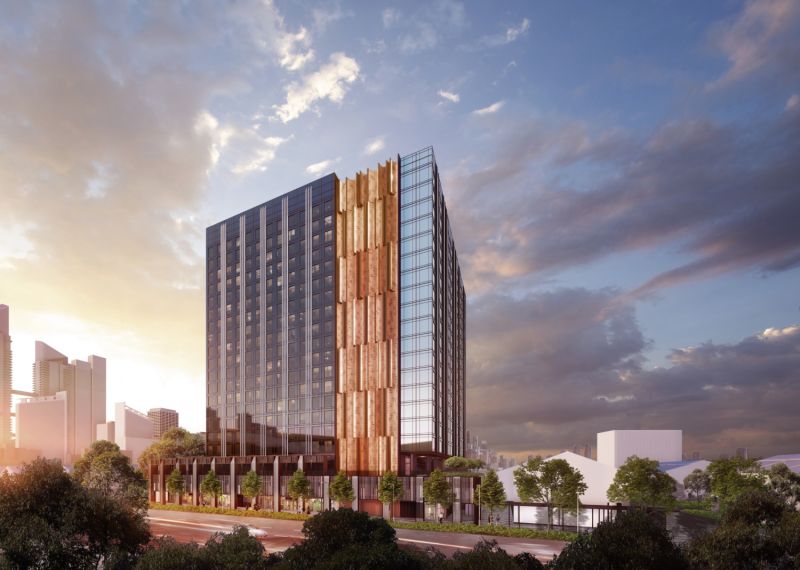
The Mercure ICON Singapore City Centre's

 The Mercure ICON Singapore City Centre occupies a prime location on Club Street, strategically situated between Singapore's vibrant Chinatown and the pulsating Central Business District (CBD). This coveted address positions the hotel to capitalize on both leisure and business travel segments, offering guests convenient access to cultural experiences, historical sites, and prominent business hubs within a 0.6-mile radius of the city center.

The hotel boasts a comprehensive range of amenities designed to cater to the needs of discerning travellers. Guests can unwind at the outdoor swimming pool or invigorate themselves at the fitness center. The on-site restaurant provides a convenient dining option, while room service ensures personalized comfort. High-speed Wi-Fi connectivity throughout the property guarantees seamless communication and productivity.

The Mercure ICON Singapore developer by  Accor, a well-established multinational hospitality group. This affiliation offers significant advantages to investors, including: Brand Recognition the Mercure brand enjoys a strong global reputation for quality and hospitality, attracting a loyal clientele and streamlining marketing efforts. Proven Management Systems Accor's established management systems ensure operational efficiency, cost control, and consistent guest experiences, translating to strong financial performance. Distribution Network membership within the Accor network provides access to a vast distribution network, increasing the hotel's visibility to potential guests and boosting occupancy rates.

The Mercure ICON Singapore City Centre's location presents a compelling investment opportunity for several reasons: Dual Clientele the hotel's proximity to both Chinatown and the CBD caters to a diverse range of travelers, offering potential for year-round occupancy and revenue generation. Singapore's status as a global tourist destination with a robust travel industry creates a favorable environment for hospitality investments. Accor's extensive experience in the hospitality sector provides a strong foundation for the hotel's success, mitigating risks and maximizing investor returns.

To gain a deeper understanding of the specific investment story behind the Mercure ICON Singapore City Centre, consider contacting the hotel's management or researching press releases related to its recent opening (April 2024). Industry reports on hotel development trends in Singapore can offer valuable insights into the broader market dynamics and future prospects for this investment.

By combining a strategic location with a well-established brand and experienced operators, the Mercure ICON Singapore City Centre positions itself as a promising investment opportunity within Singapore's dynamic hospitality landscape.

While the precise architect and interior design firm behind the Mercure ICON Singapore City Centre remain undisclosed, uncovering their identities and the design narrative can be achieved through strategic exploration.

Accor, the proprietor of the Mercure brand, frequently collaborates with renowned architectural and design firms for their hotel projects. To embark on this investigative journey, consider these established Singaporean firms known for their impressive portfolios: WOHA Architects: Renowned for their innovative and sustainable designs, WOHA Architects  consistently push boundaries, potentially aligning with the Mercure ICON's contemporary aesthetic. DP Architects: A leading architecture firm in Asia, DP Architects boasts extensive experience crafting hospitality experiences. Their portfolio might reveal design sensibilities that resonate with the Mercure ICON. A prominent name in design consultancy, Lendlease  could have played a role in shaping the visual identity of the hotel. Explore their architectural and design projects for potential insights.

The Mercure brand strategically incorporates local cultural influences into their hotel designs. Given the hotel's strategic location at the intersection of Chinatown and the CBD, here are some potential design narratives to consider: The design could seamlessly weave together contemporary aesthetics with subtle yet impactful references to Singapore's rich cultural heritage, particularly the architectural styles and motifs that characterize Chinatown. This narrative envisions a design that reflects the vibrancy of the CBD while incorporating areas of serenity. Imagine a calming environment amidst the bustling city, offering guests a refuge for relaxation. This concept portrays the hotel as an oasis within the urban jungle. The design could feature natural elements and evoke a sense of tranquility, creating a welcome contrast to the city's dynamism.

To craft a truly professional and unique design story, delve deeper into these areas. Conduct a comprehensive study of architectural styles prevalent in Singapore's Chinatown, drawing inspiration from the historical significance of the location. Research modern design trends currently shaping Singapore's hospitality sector to ensure the narrative reflects contemporary preferences.



Wednesday, November 8, 2023

L7 Myeongdong Seoul, Korea

Nestled amidst the vibrant buzz of Seoul's Myeongdong district, L7 Myeongdong emerges as a sanctuary of contemporary style and urban convenience, catering to the discerning tastes of modern travelers. As the third installment of the L7 Hotels collection, following the triumphs of L7 Hongdae and L7 Gangnam, L7 Myeongdong upholds the brand's commitment to providing stylish accommodations and exceptional guest experiences.

L7 Myeongdong enjoys a prime location, mere steps from Myeongdong Station, a bustling hub on Line 4 of the Seoul Metro. This strategic positioning grants effortless access to Seoul's myriad attractions, including the iconic Dongdaemun Market, the grandeur of Gyeongbokgung Palace, and the breathtaking vistas from the N Seoul Tower. The hotel's proximity to a diverse array of restaurants, shops, and nightlife venues further enhances its appeal.

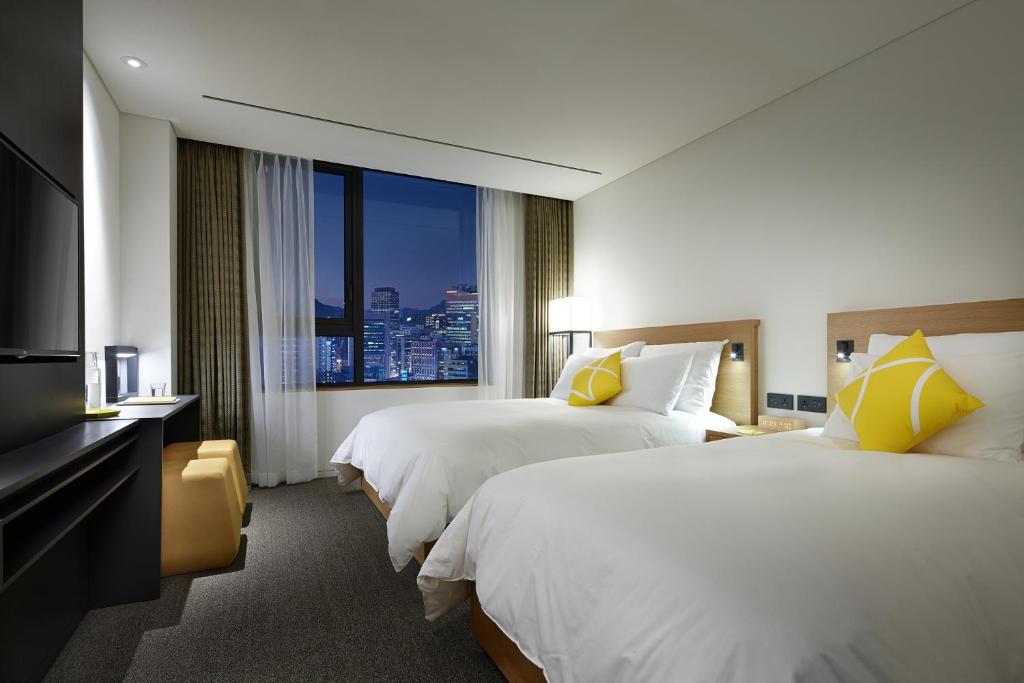
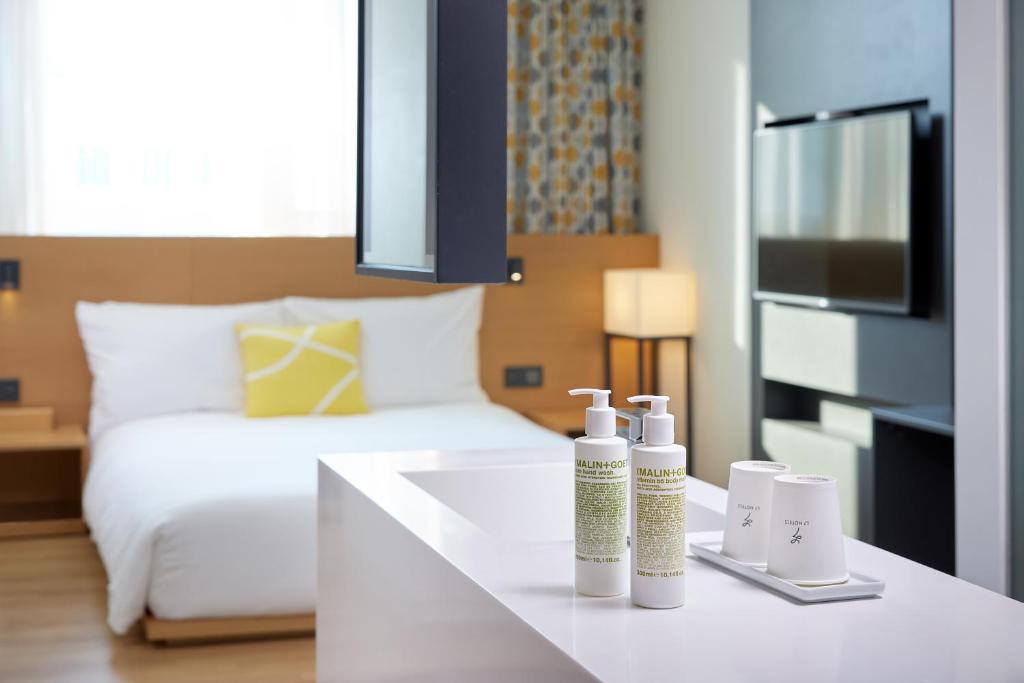
L7 Myeongdong's 150 guest rooms embody a harmonious blend of modern aesthetics and impeccable comfort. Each room exudes an air of sophistication with its sleek furnishings, vibrant color accents, and thoughtfully curated amenities. Flat-screen TVs, minibars, and high-speed Wi-Fi ensure that guests stay connected and entertained throughout their stay.

Beyond its stylish accommodations, L7 Myeongdong unveils a treasure trove of facilities designed to pamper and rejuvenate guests. The rooftop lounge provides an idyllic setting to unwind while soaking in panoramic city views. The state-of-the-art fitness center caters to fitness enthusiasts, while the business center ensures that work stays on track.

Lotte Hotels & Resorts is the developer of L7 Myeongdong. This is the third installment of the L7 Hotels collection, following the triumphs of L7 Hongdae and L7 Gangnam.

The Lotte Group is one of South Korea's largest conglomerates, with interests in a wide range of industries, including food, chemicals, retail, and construction. The company was founded in 1947 and has grown to become one of the most successful businesses in South Korea.

The Lotte Group's investment in L7 Myeongdong is a testament to the company's confidence in the hotel market in Seoul. The city is a popular tourist destination, and there is a growing demand for high-quality accommodations. L7 Myeongdong is well-positioned to capitalize on this demand, with its prime location and stylish accommodations.

The construction of L7 Myeongdong began in 2018 and was completed in 2020. The hotel cost an estimated ₩200 billion to build. The hotel has been a success since its opening, and it has been praised for its design, amenities, and service.

L7 Myeongdong is a significant investment for Lotte Hotels & Resorts. The hotel is expected to generate significant revenue for the company, and it will help to solidify the Lotte Group's position as a leader in the Korean hospitality industry.

The architect of L7 Myeongdong is WOHA Architects, an award-winning international architecture firm based in Seoul, South Korea. WOHA is known for its innovative and sustainable designs, and it has a proven track record of success in designing hotels and other hospitality projects.

The interior design of L7 Myeongdong was led by Studio Junglim, a renowned design firm based in Seoul, South Korea. Studio Junglim is known for its sophisticated and contemporary designs, and it has a deep understanding of the needs and preferences of modern travelers.

The design concept for L7 Myeongdong was inspired by the hotel's location in the heart of Seoul's Myeongdong district. The design team wanted to create a hotel that would reflect the district's vibrant energy and modern aesthetic. The hotel's exterior features a striking façade with geometric patterns that reference the traditional Korean patterns found in hanbok, the traditional Korean attire.

The interior of the hotel is characterized by its use of natural materials, such as wood and stone, and its sleek, minimalist lines. The lobby features a large open space with high ceilings and floor-to-ceiling windows that provide stunning views of the city. The hotel's guest rooms are designed to be both comfortable and stylish, with plush beds, high-quality furnishings, and modern amenities.

The design of L7 Myeongdong has been praised for its creativity, sustainability, and functionality. The hotel is a showcase of Korean design talent, and it is a testament to the Lotte Group's commitment to providing its guests with a unique and memorable experience.

Here are some of the key design ideas that were incorporated into L7 Myeongdong:

Harmony of tradition and modernity: The design of the hotel reflects the harmonious blend of tradition and modernity that is found in Seoul. The exterior of the hotel features traditional Korean patterns, while the interior is characterized by its sleek, minimalist lines.

Use of natural materials: The hotel uses natural materials, such as wood and stone, to create a warm and inviting atmosphere. The use of natural materials also helps to create a sense of sustainability.

Functional and stylish accommodations: The hotel's guest rooms are designed to be both comfortable and stylish. The rooms feature plush beds, high-quality furnishings, and modern amenities.

Open and airy spaces: The hotel features open and airy spaces, such as the large lobby with floor-to-ceiling windows. These spaces help to create a sense of spaciousness and light.